Cartophile
When I was very young, my mother would read me a bedtime story. I frequently requested Kenneth Grahame’s The Wind in the Willows, not just because the opening chapter painted a tempting depiction of forsaking spring cleaning for meandering “hither and thither” along the riverbank, but for the opportunity to spend another few minutes ogling the illustrated map of the fictional British countryside belonging to its handful of diverse anthropomorphized animal residents. I rarely stayed awake past the first few pages, and never let my mother pick up where she left off more than a few chapters into the book.
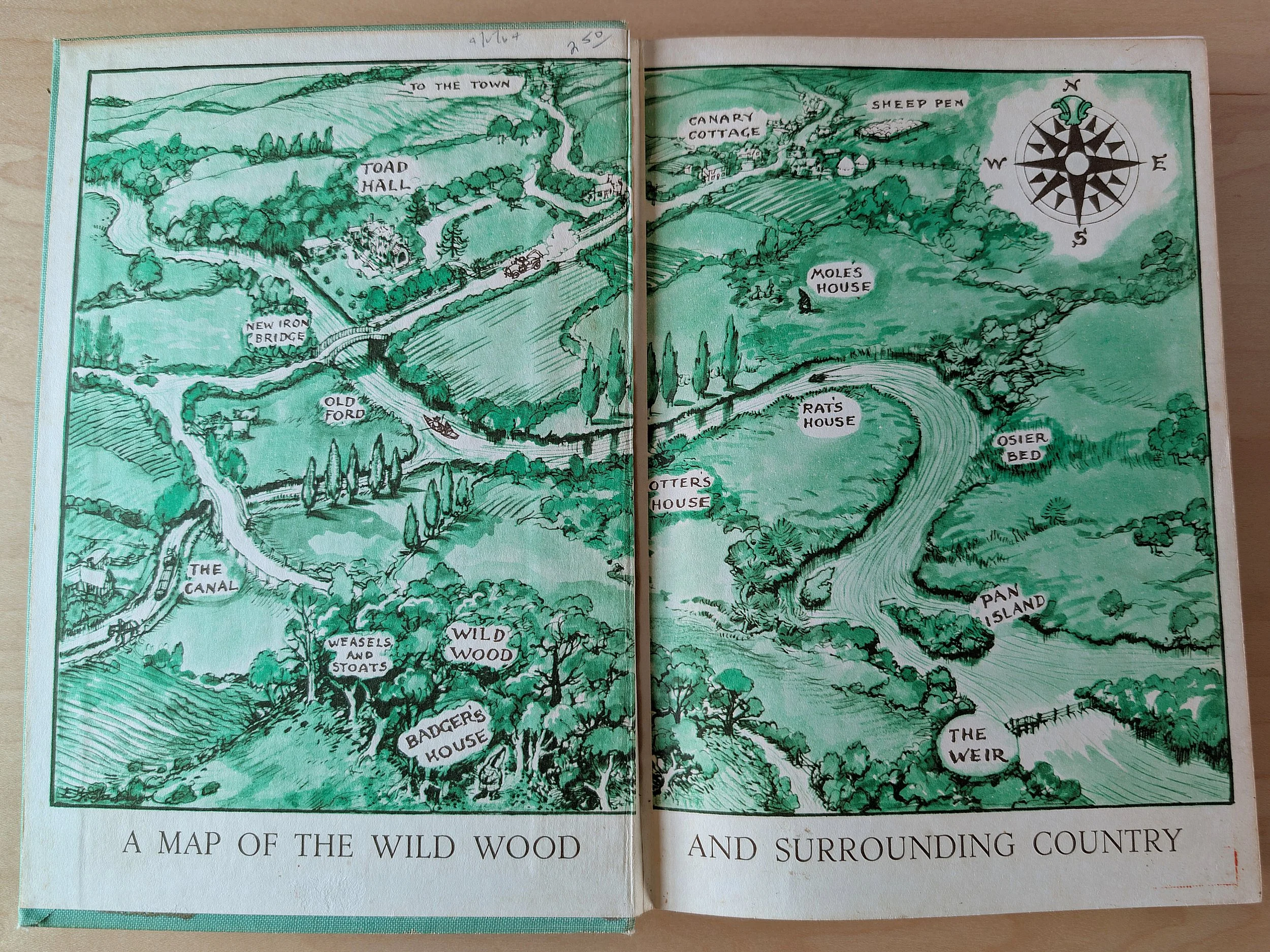
On her deathbed this past summer, I read to her a marathon performance from cover to cover. Hopefully, she could visually frolic in that carefree landscape one last time, and finally hear how the tale ended, if she’d never finished reading it on her own.
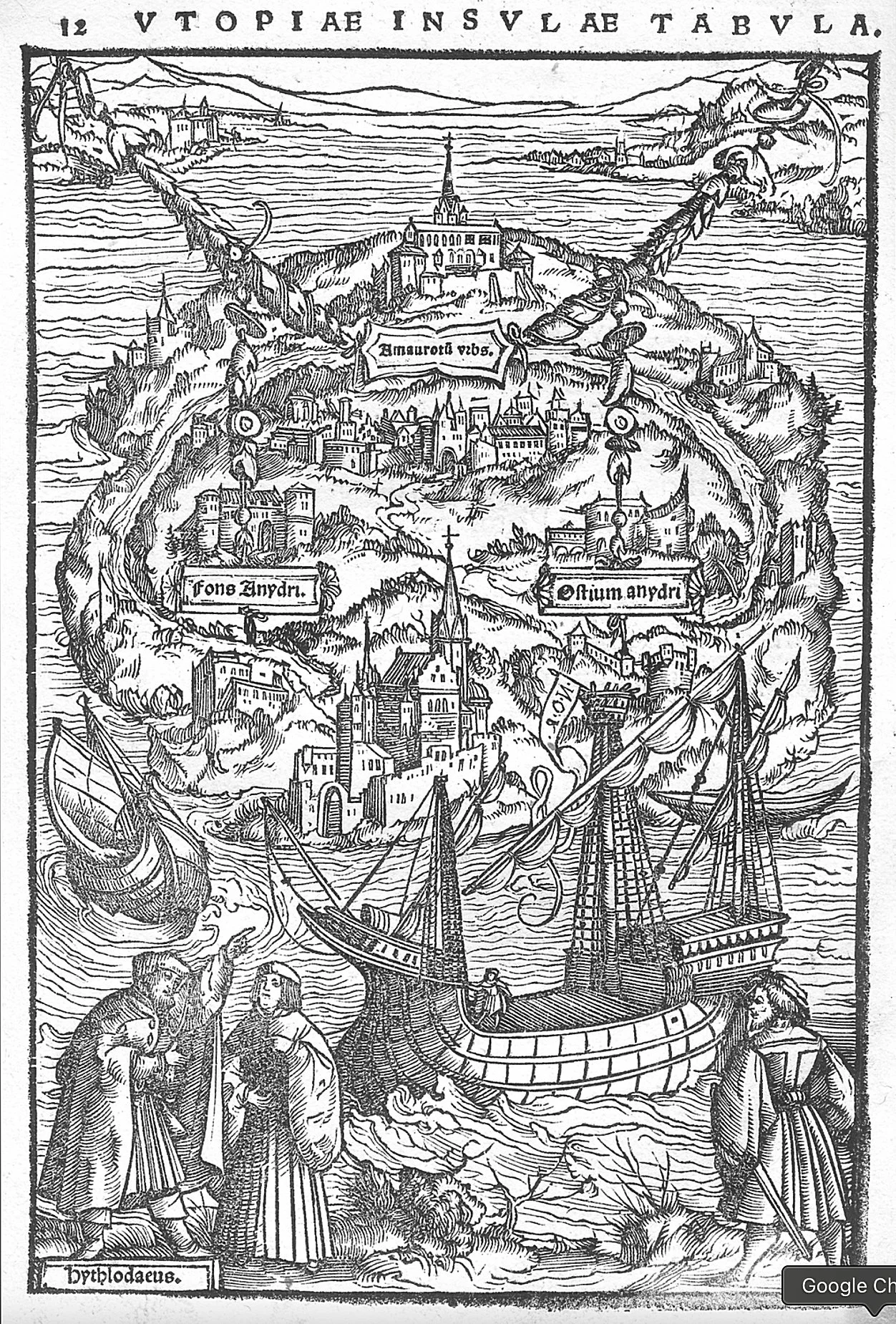
I can think of many other stories that I was drawn to because of a map, or where the shape of the land took on a character of significance all its own. Middle Earth from J.R.R. Tolkien’s The Lord of the Rings leaps to mind, along with Dante Alighieri’s map of hell in the Inferno, Thomas More’s map of Utopia, and Robert Louis Stevenson’s legendary Treasure Island.
Non-fiction maps also inform many writers’ craft, such as Henry David Thoreau’s detailed measurements of Walden Pond in Walden, histories that focus on explorers’ routes, like that of Meriwether Lewis and Willam Clark or Ferdinand Magellan, or road trip novels like John Steinbeck’s Travels With Charley.
This past December, after our recent Winter Solstice family celebration was complete, my husband and I spent an afternoon visiting a few shops and enjoying a late lunch in Pawtucket, Rhode Island. We’d wanted to check out The Map Center for quite some time. Now owned by Andrew Middleton, the center stocks all manner of maps, many books, and other surprising cartographic products, such as a live map of the Boston MBTA system. As Middleton relayed in an interview by the Providence Journal in December of 2023, “If it tells a story… then that’s something I want to have in the store”.
While I browsed, he explained that The Map Center is many things: bookstore, museum, gallery, and frameshop. In his opinion, the closest real competition would be Metsker Maps in Seattle, Washington, and World of Maps in Ottawa, Ontario.
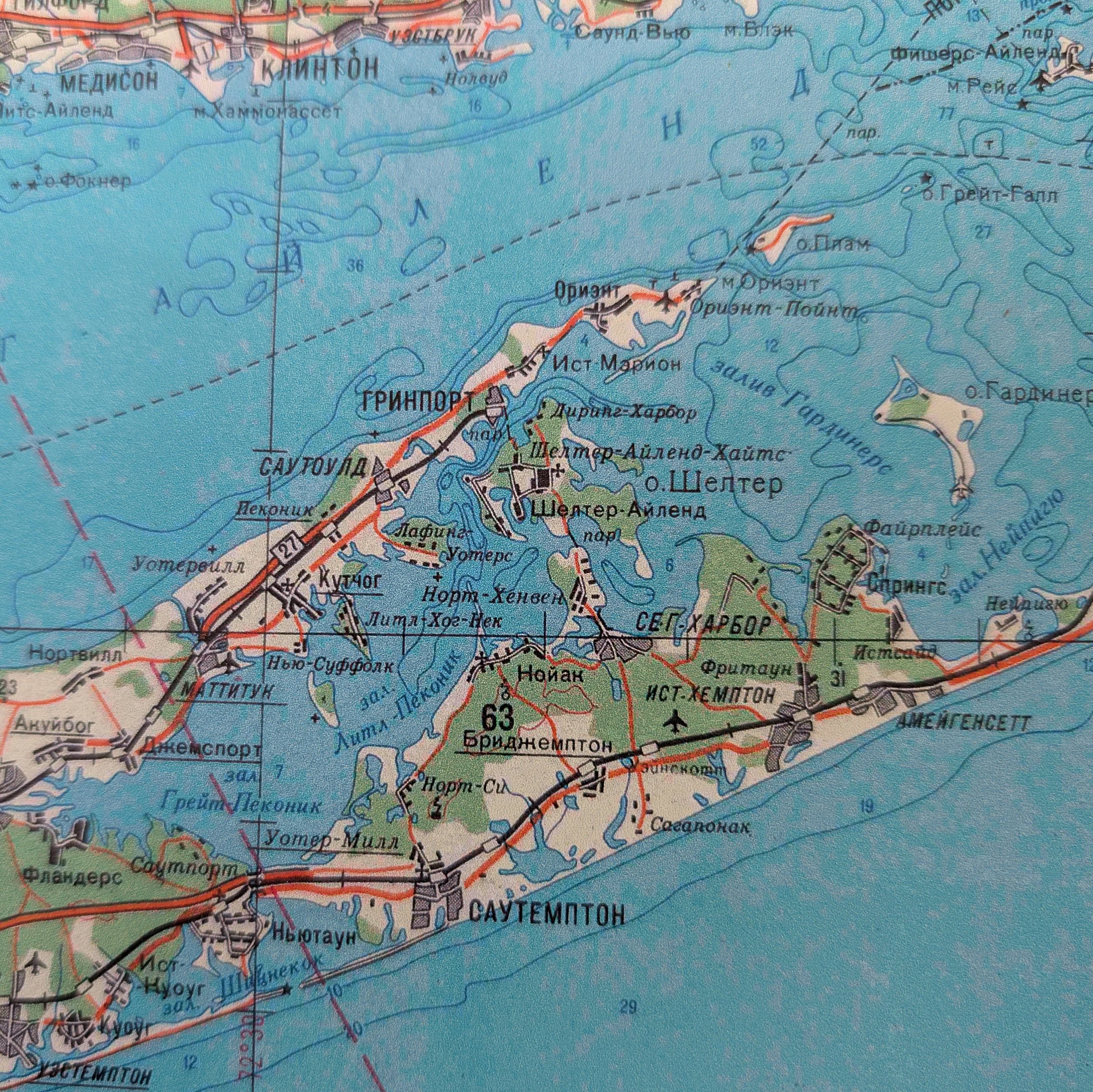
I even found a Russian map of where I grew up in New York, chaotically stacked beneath a hanging quilt of a map of southeastern Rhode Island. Middleton is passionate about creating maps that complement local historical narratives.
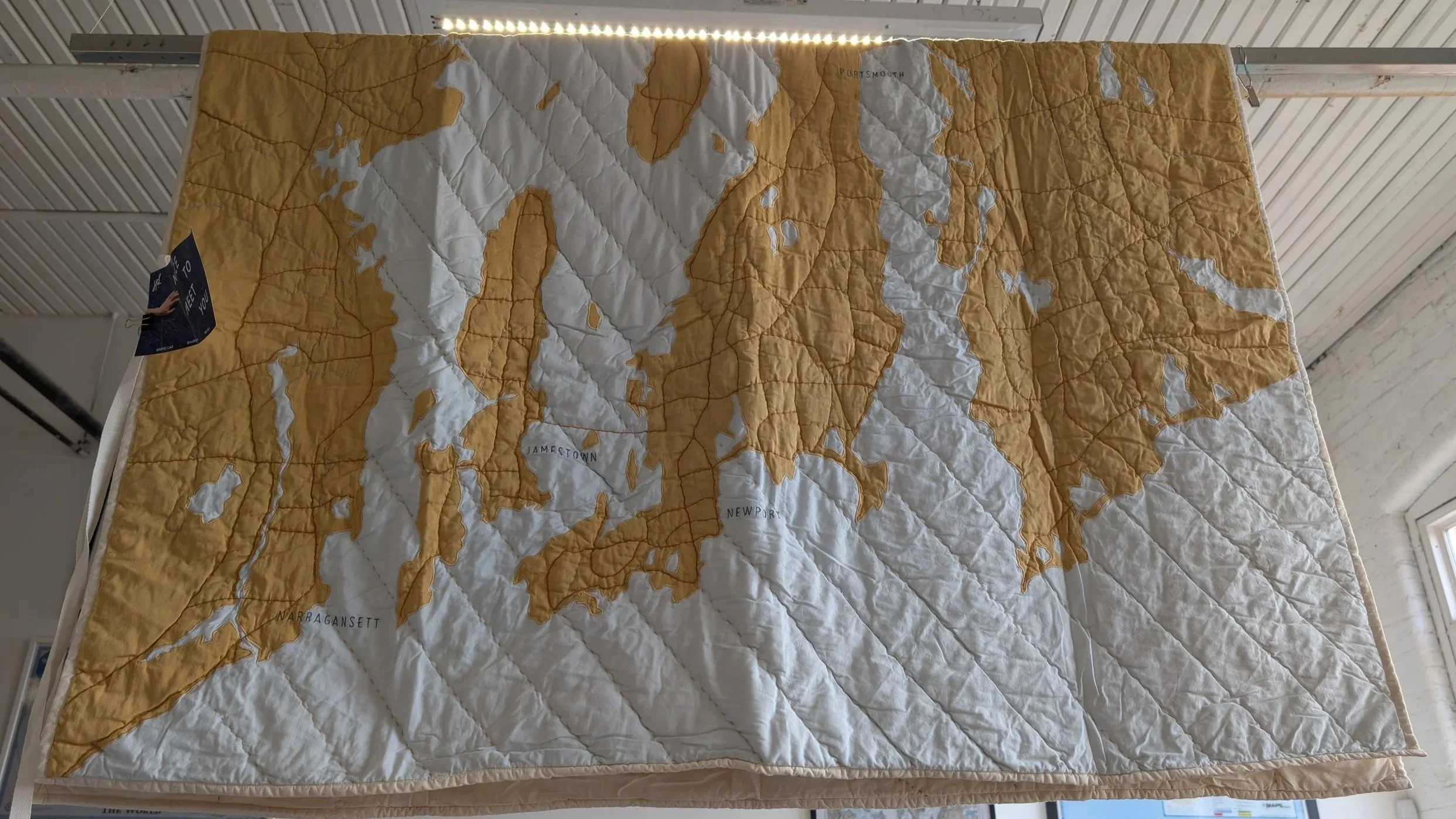
While I had the option to purchase The Writer’s Map, by Huw Lewis-Jones, or a series of tiny foldout literary maps, illustrating the geography of places such as Bram Stoker’s Dracula, I limited myself to a single item, The Atlas of Mars, by Coles, Tanaka, and Christensen. Besides perusing it for enjoyment, I can also use the atlas to inform some of my current science fiction writing. My Martian obsession began in high school, with a final paper for a Russian history class about Soviet attempts to map the red planet. A few years later, in a “Maps, Atlases, & Geography” class at Syracuse University, my term paper topic was Mapping Mars, which required me to spend many hours in the geology library (well before Google’s existence), one of my favorite places.
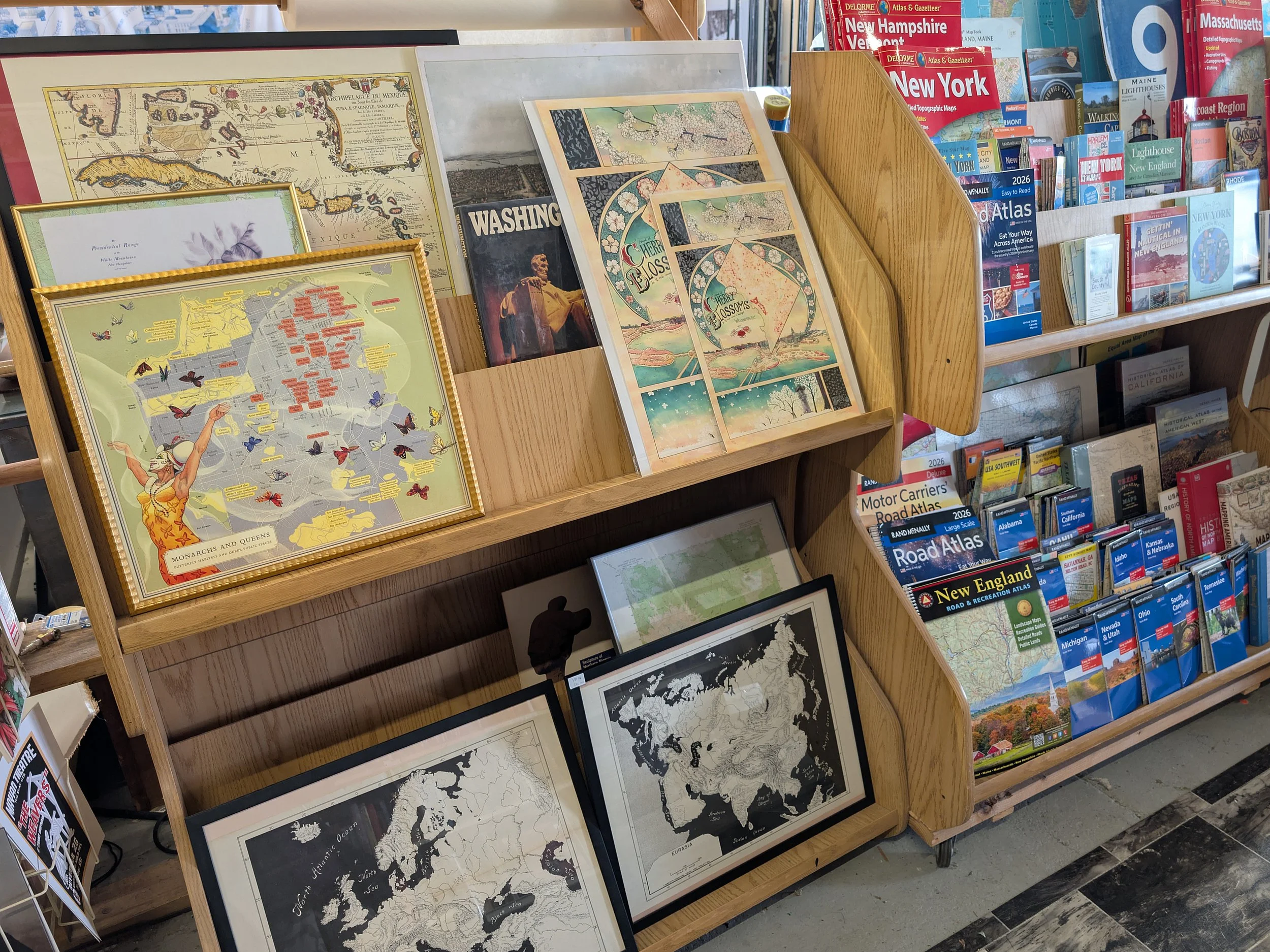
Maps inspire writing, and vice versa. The same Russian history teacher from high school, Jonathan Meisel, also ran a political role-playing game for students which he titled “Simulations.” He generated fictional country titles, the names of which I purloined to write my second-ever piece of childhood fan fiction (the first was about my cat, copying the format of writing from an animal’s perspective, an impactful method I still use to this day).
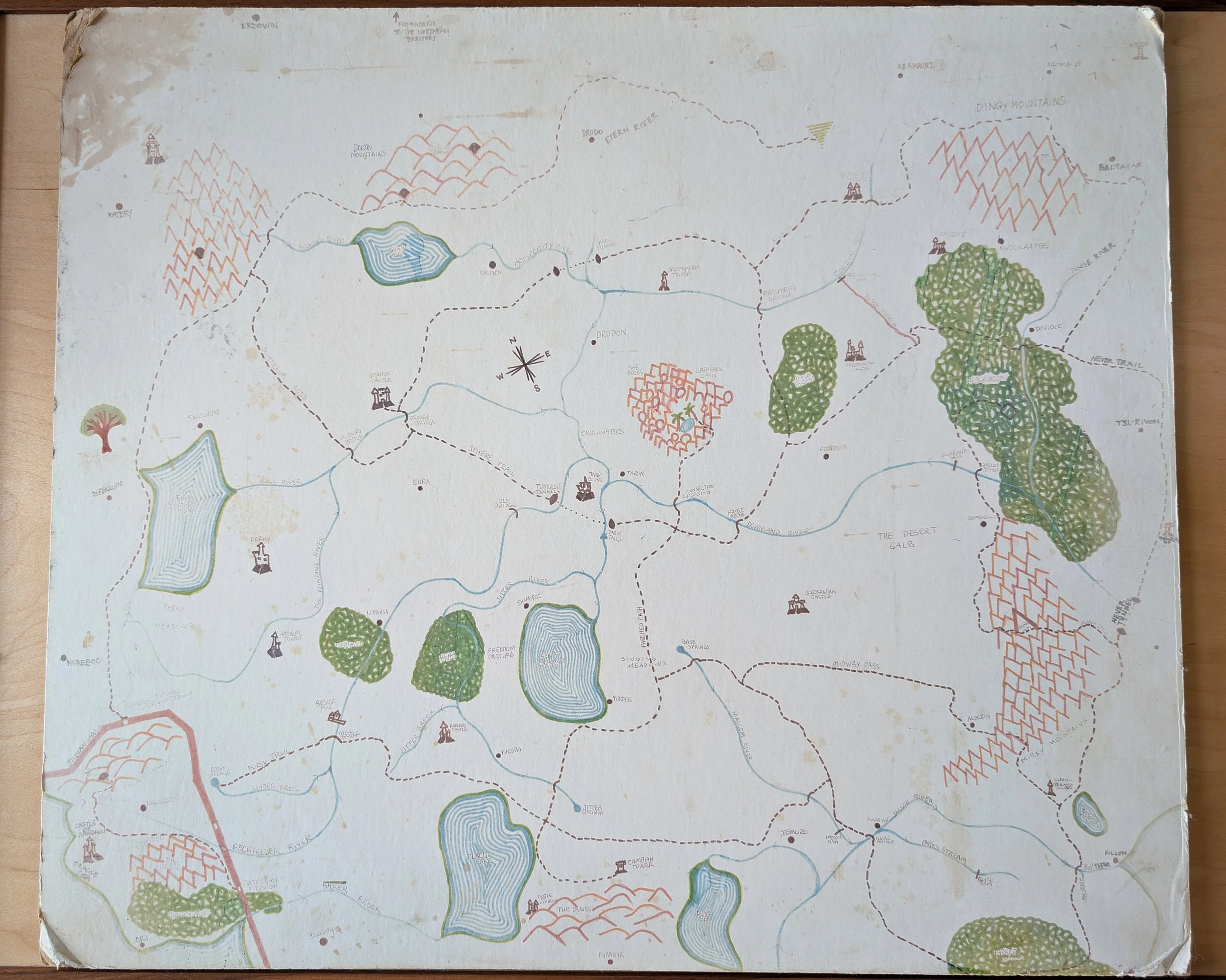
I used the country titles to enrich my own map illustration, which in turn inspired the (unfinished) fantasy novel. Unearthing that hand-drawn map while moving to Westport four years ago has prompted a niggling desire to go back and rewrite and complete that book.
Those teenage years brought maps in other forms: campus maps, downhill ski maps, MapQuest for road trips, and especially maps to support computer games. I’d spend days in front of my Amiga playing Bard’s Tale II, carefully drawing maps of dungeons in a book of graph paper. In order to survive the expansive levels of Dungeon Master, I’d sketch shorthand maps to help locate the firestaff while evading pesky screamers. At the heart of most games is a map, and most games are nothing more than interactive stories.
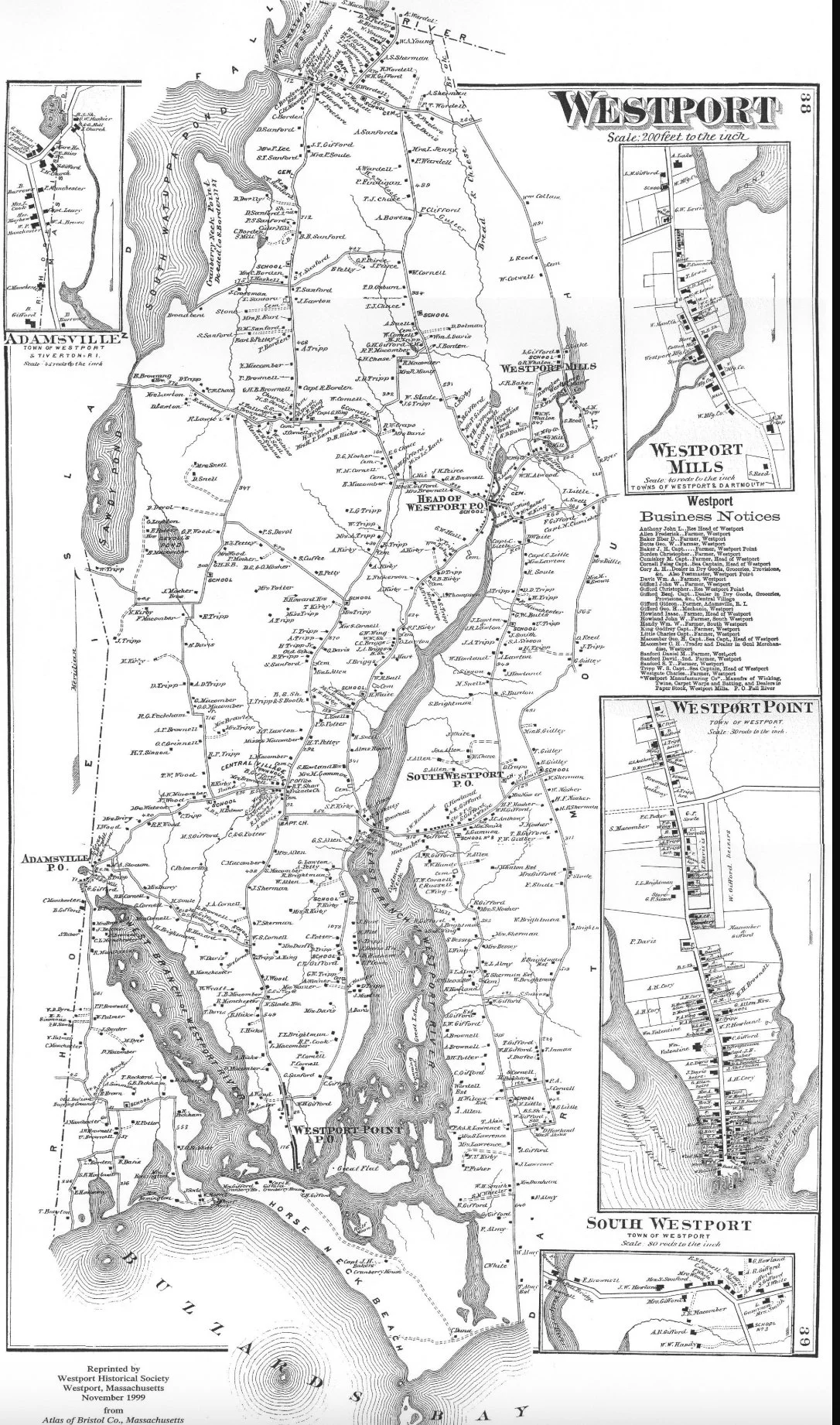
1871 Westport map from wpthistory.org
Many writers create an outline before they jump into writing a story. An outline is a written or mental map of where the story might take its readers. Historical maps can be viewed as an outline of where real stories took place in our community.
The Westport Historical Society is currently working with a group of volunteers to transcribe the journals of Henry Smith.
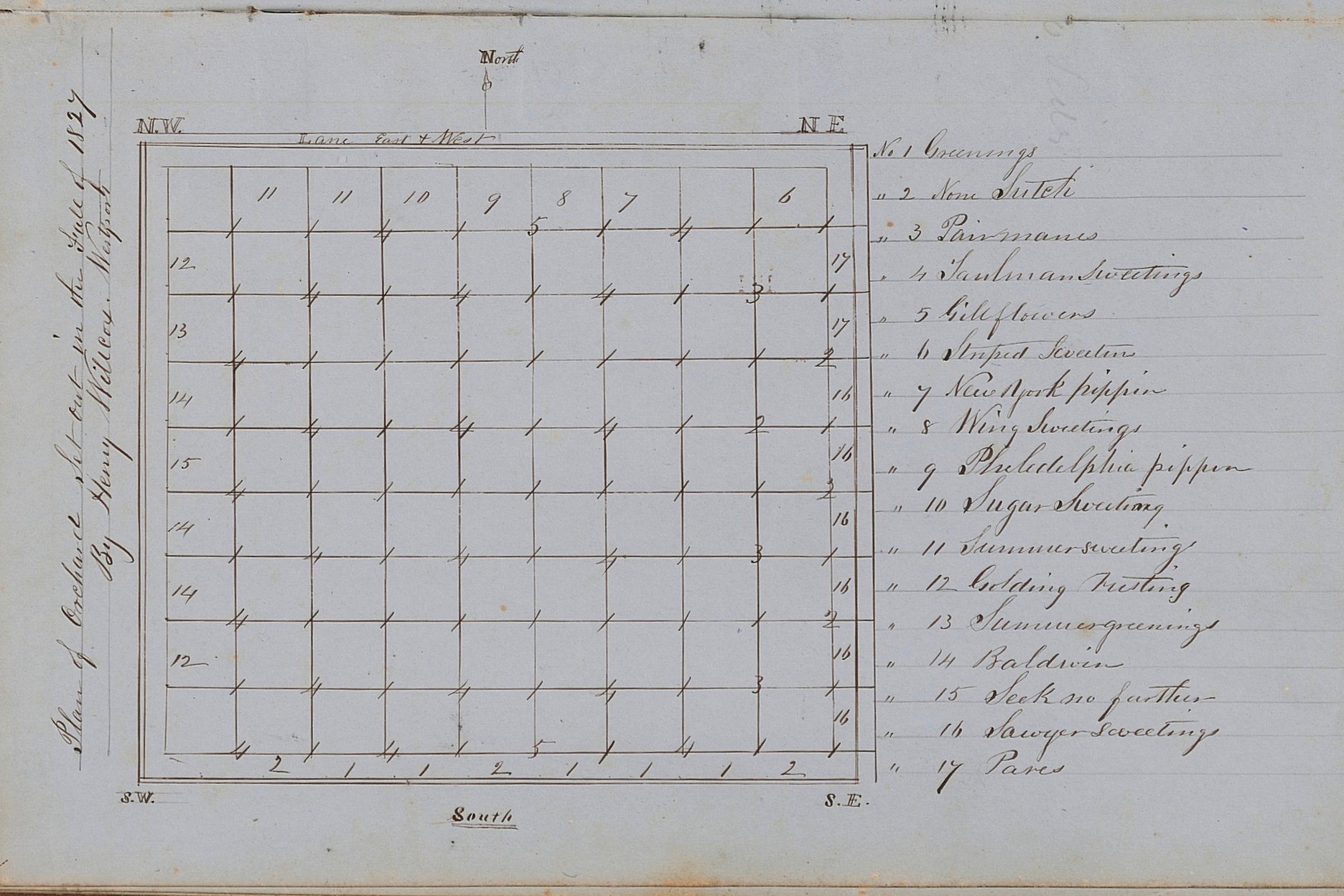
While reading the daily accounts of life in Westport in the 1800s is interesting, I found that Smith’s accompanying map of his father-in-law’s fruit orchard better excited my understanding of a piece of land that I presently view from my bedroom window.
Whether you’re aiming to write a non-fiction account of the past, a report on a current event, or a fictionalized account based on local lore, a map can get you started. What maps have played an important part in your life? Do you utilize maps to inform your writing?