Brigid: Goddess of Poetry & Smithcraft
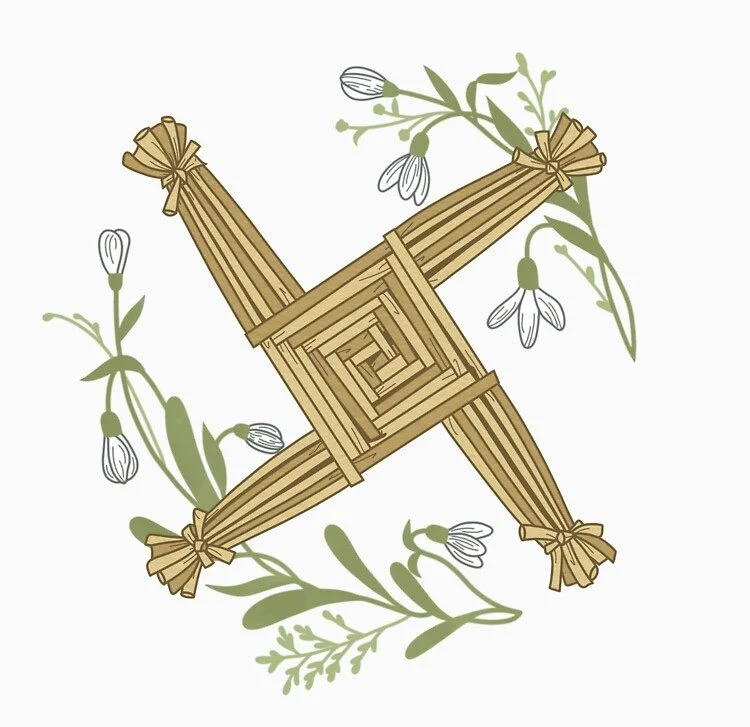
Ancient Ireland had a rich pantheon of gods and goddesses, creation myths, and folklore. One of the principal goddesses of the pantheon is Brigid. She is the patron goddess of poetry, healing and smithcraft, caring and feeding the fires that keep our world thriving.
It’s believed that after the introduction (or forced conversion) of Christianity, the goddess Brigid was absorbed into the Catholic Communion of Saints, retaining her name and her constantly-burning, carefully-tended flame. Even as Celtic Paganist traditions were outlawed or forgotten, Saint Brigid has survived the centuries, collecting new myths and miracles as a devout nun. Her Feast Day - Saint Brigid’s Day, February 1st - is now a publicly recognized holiday in the Republic of Ireland.
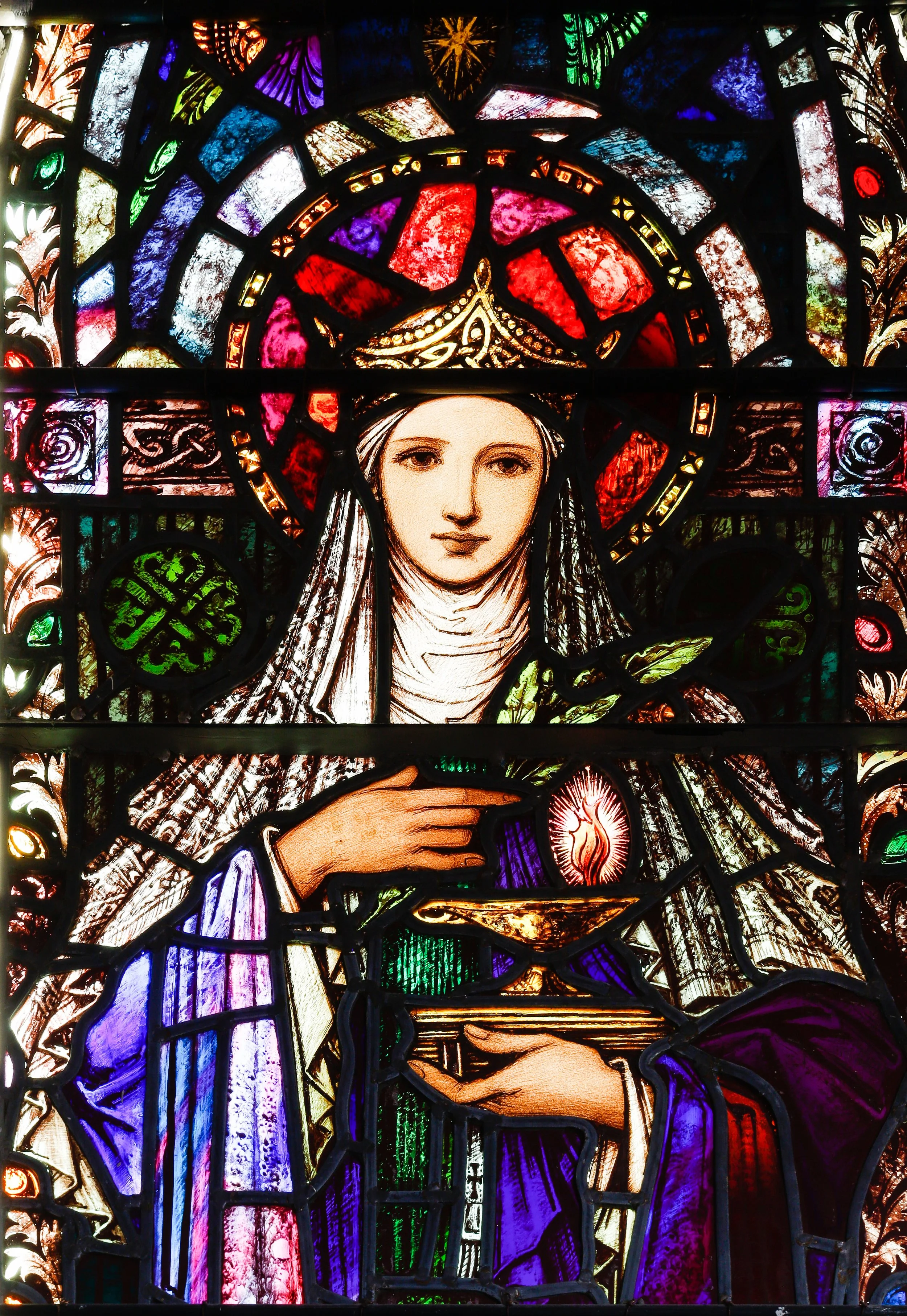
Depending on which book you consult, devotees of the goddess Brigid celebrate her feast day on February 1st or 2nd - a fire festival called Imbolc. Astrologically, Imbolc marks the midway point between the Winter Solstice and the upcoming spring equinox. It’s a moment to reflect on all you have survived in the darker months, and to celebrate the return of the light and warmth. We should savor these moments to huddle around our fires (or candles) and indulge in the comfort.
But remember - Brigid has three aspects. Take a moment to warm yourself and heal your heart. Then we must get back to the work that feeds the fire.
As a poet myself, I find the links between poetry and smithcraft deeply inspiring. Brigid not only tends the fires of inspiration for our poems, but she keeps a forge where physical weapons can be created and strengthened. We’ve heard the old adage “The pen is mightier than the sword.” In my opinion, both are equally mighty weapons, and the wielder of each has a responsibility to use them correctly. We’ll all eventually be called on to do something - it’s important that we weigh each option and choose the best one for ourselves.
Throughout recorded history, poets have spoken directly to power, threatened the status quo, or reimagined our lives in language. A poet was seen as a messenger, given divine inspiration, and carried the histories of their culture in their words. What does that mean for us in 2026? What can Brigid’s ancient fire do for us here?
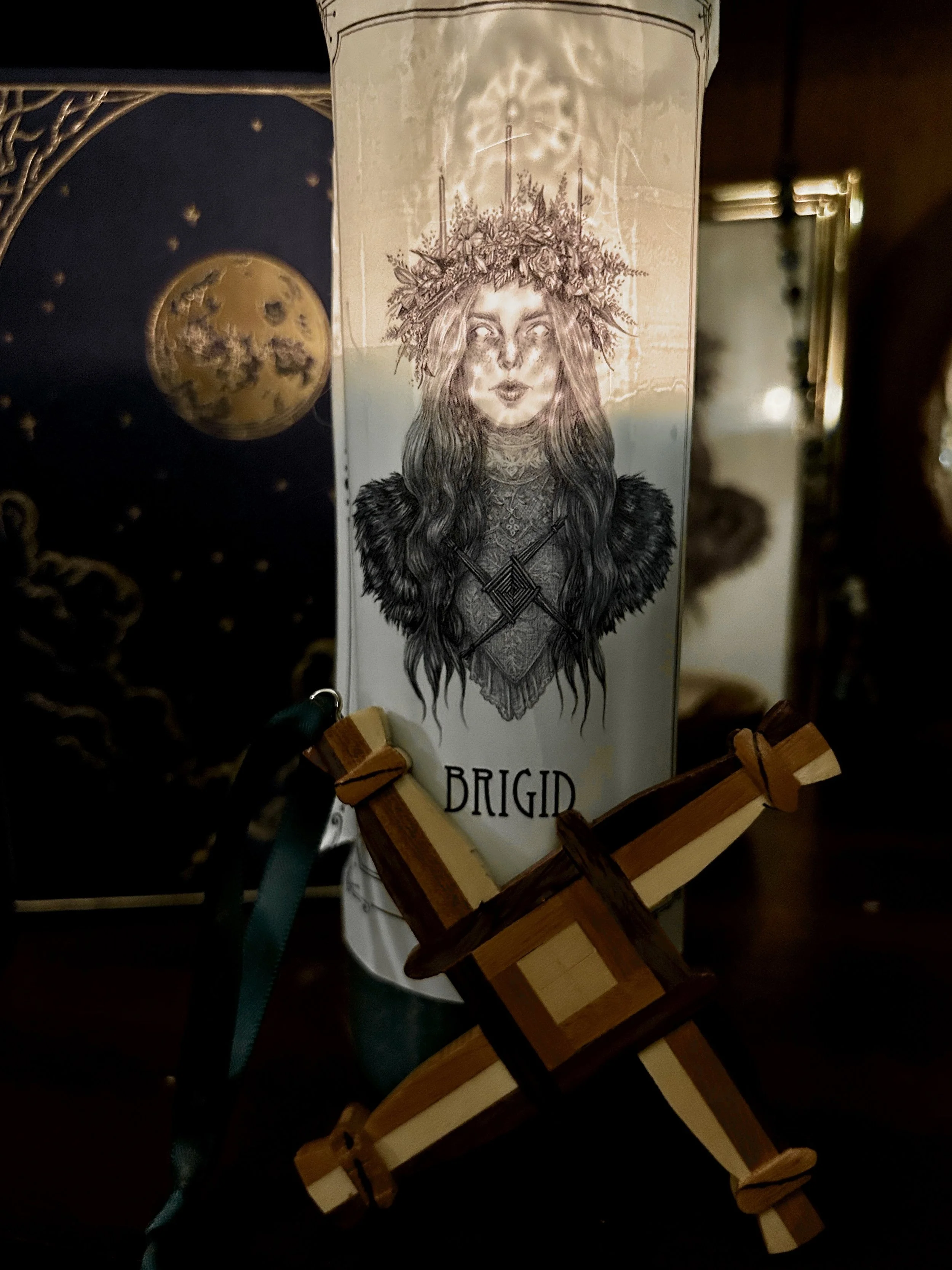
At the time of writing in New England, there’s piles of snow - with more expected in the coming weeks. Winter is long and often brutally cold. The first week of February feels about as far away from Spring as Christmas does, quite frankly. But you can see small changes - in the way your house plants start to bud new leaves, in the sun peeking out for just a little bit longer every day. Soon enough the first of the daffodils will be poking up through the earth; birds will be busy with nesting. Good things are on the way.
And so, to celebrate Imbolc, I’d urge you to ask Brigid for some inspiration and write yourself a poem. Consider all you have been through over the last few months, from December 21st to now. I hope there are moments of joy in there somewhere, but include everything - lovely or horrible, it’s all important. Feel them, consider how they have changed you. Write a poem to call in the good that is coming, that grows with the sunlight and flowers. This can be personal change that comes from within you or it can be an incantation calling forth something good in the world, to break up the darkness that has settled over us. You are a poet and a blacksmith, forging a weapon against that darkness.
If Brigid does give you a little bit of her fire, I’d love to read it - please feel free to send your Imbolc poems to me via email at sarahjmulvey515@gmail.com