How to begin? Before me is an artwork which will generate a poem. This is Ekphrasis poetry. Its roots reach back to Homer’s Iliad with his description of Achilles shield or to the Bible and other ancient texts where the writer uses words to help the reader see, feel, and hear events and figures. Since there were no cameras back then, the verses and poems often summon up the subject itself in exquisite detail.
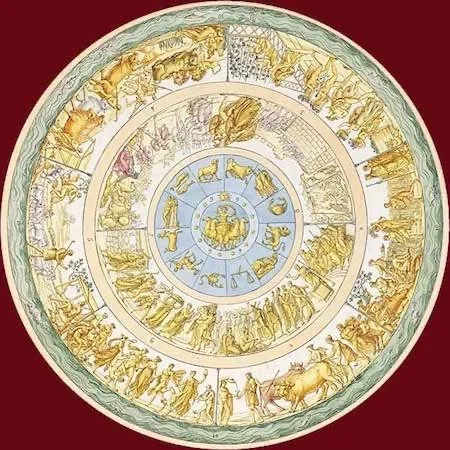
Achilles Shield
Then first he form'd the immense and solid shield; Rich various artifice emblazed the field; Its utmost verge a threefold circle bound….Homer: Iliad
Today, we have photographs to generate clear and detailed images, so an Ekphrastic poem today often takes us beyond the subject. Certainly, the poem is inspired by the subject but the writer explores personal feelings, experiences, and associations triggered by the image.
But this is all explanation and I want to talk about exploring.
For me, this process is not an easy one. No immediate rush to the keyboard where words pour out. I spend a long time looking at an artwork. I jot down anything that I see, that occurs to me, that I feel, that I imagine.
Then comes the research. This is actually fun. 90% of what I learn I probably won’t use directly. But it begins to translate the image into thoughts and thoughts into phrases, words. And here the invention begins, tapping into personal experience and feeling.
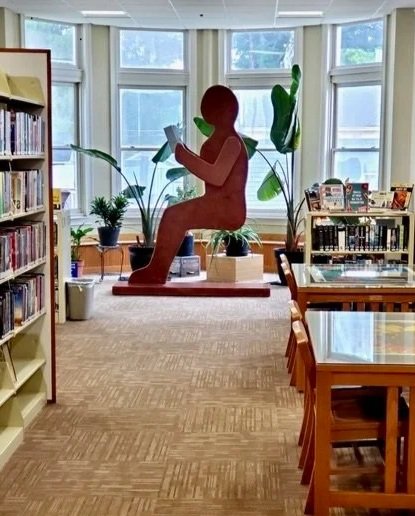
Woman Reading:
sculpture by Mark Wholey
For example, I am given an image of a 3D work called Architectural #1. Looking at the image, I know that viewing a photo of the work would not be enough, so I ask to see the sculpture “in person.” This is crucial as the spatial dynamic—the full 360 view— is important. This is actually one structure, back and front.
I try not to discuss the artwork too much with the artist as I know I might be susceptible to her inspiration and intention. As a poet, I am not a reviewer or curator and do not want to “describe” her art. The less explained to me by the artist, the better.
Architectural #1 by Chiara Romano Van Erp
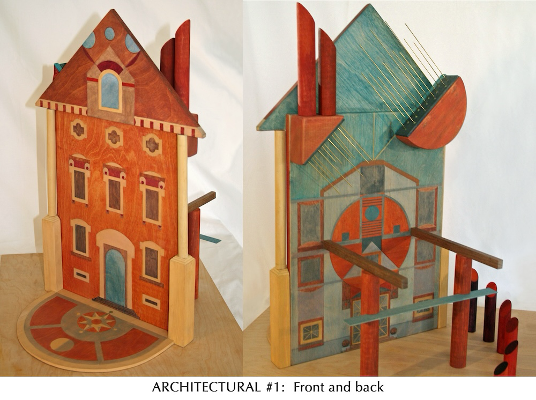
The poet’s work is a work of “art” in itself. Seeing Architectural #1 in person gives me my first spark…that the “house” is really one façade with a back and a front. And each façade is quite different: the “front” being an example of classical architecture and the backside harder to pin down, but with geometric symbols on the wall and a strange “space” inside, minimally delineated.
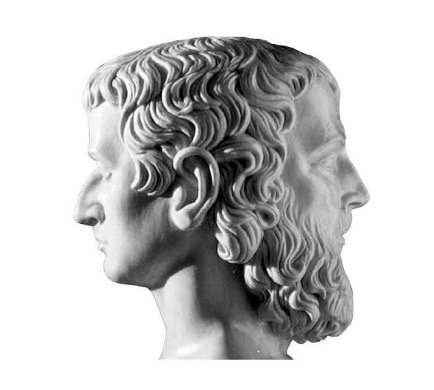
This is where this poet spends many hours taking different paths. Seeing the artwork as having two façades leads me to Janus, the “two- faced” Greek god, looking toward the past, looking toward the future, god of doorways, gates, time, transitions. I explore the realm of Janus, all his associations, and use reams of “paper” writing it all down. I write a whole poem playing off this idea. And then circling around to my grandmother and her secrecy and hidden “side.”
Ultimately, I get lost in thinking too much. And the reference to my grandmother I find too “easy” for my liking. But again, I don’t regret any of the time. It leads me to knowing I need a “voice” that is more irreverent and playful.
Janus, the two-faced Greek God
Next, I “research” about architecture and design. It gives me a context that is related to the artwork. It turns out there are a number of buildings with two façades, sometimes completed years apart. Fascinating but so many definitions and words I encounter are Latinate (classical, symmetry, balance, equilibrium). Again, another poem is hot off the press. And another poem not quite right.
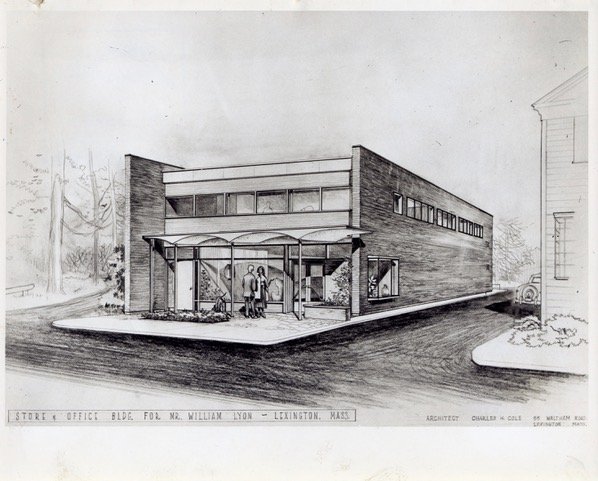
Charles H. Cole Lyons Building, Lexington
Now it is time to ask for help. Friends and fellow poets are fertile ground for some frank responses and suggestions for how to get off the intellectual wave-length and into the play of words. This suits my final version of the poem where I decide to “play” on the structures of the sculpture and stop seeking for explanations of what I am seeing or what the “architect” has in mind. It is time to start climbing on and around the structure itself… to play.
In some ways, this poem is more intimately connected to the artwork. Other poems I’ve written have traveled far into my own personal feelings or political beliefs, but for this poem it was a playground. And fun!
Façade
after Architectural #2 by Chiara Romano Van Erp
Every façade has its other side.
This house, a public front,
appealing to the eye.
Appearing proper solid, fitting in.
Where harmony’s an easy word to use.
And hide behind.
Inside, such curious decisions.
No corners or couches or comfy chairs.
Too many things missing to let you settle in.
A hundred ‘whys’ to ask the artist,
absent but for signatures everywhere.
Deliberate colors thrown against a wall.
A mandala? Some soliloquy?
What does it want to say?
Light rays slanting up, down,
a roof that’s only air.
These posts and beams — merely props
or a means to frame what comes?
0h, forget the search for explanations.
Explore! A space to play in.
A jungle gym to climb, hang upside down.
A fence to run around — in, out, slalom style,
a child again. An eye unfettered.
Belt out songs with intersecting lines,
rhymes of circle, angle, square. Be there!
And when it’s time to face front again,
return to careful measure, not quite
so balanced and well-behaved.
Diana Cole