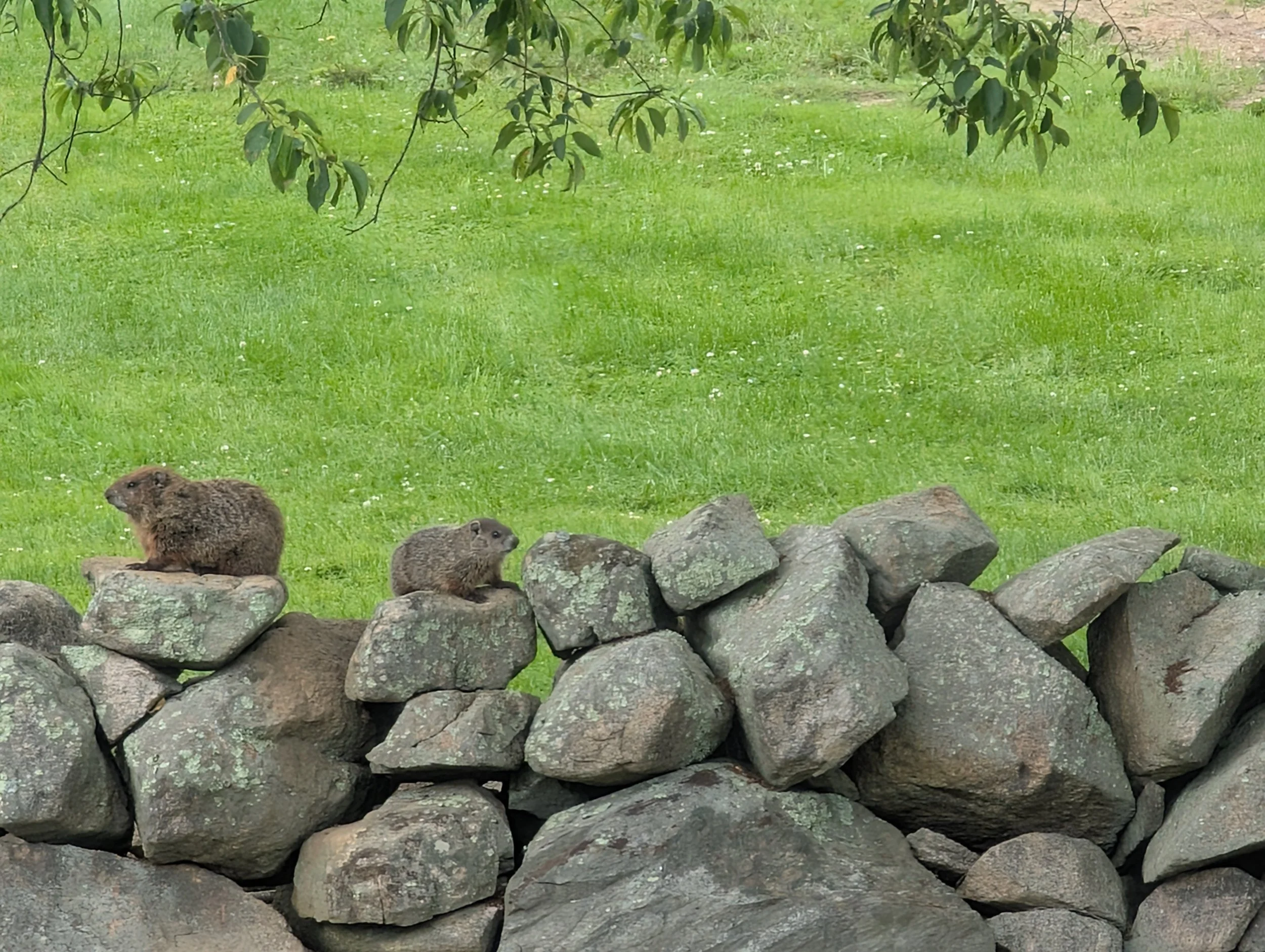
Stone Walls
One of my great great grandfathers, James J Smalley, New York state assemblyman and owner of the Smalley Inn in Carmel, NY, started out as a laborer, building stone walls in Putnam and Westchester counties. While sometimes renovated or relocated, New England’s stone walls serve as important historical landmarks, denoting property lines and creating boundaries for animals and crops. Their construction and family histories fascinate me.
While the state of Rhode Island is considered to have the largest concentration of stone walls in New England, Westport, MA, which borders Rhode Island, is said to rival adjacent Little Compton for the most stone walls in one town. Many of the stone walls in Westport were constructed in the early eighteenth century and have served as inspiration for artists and writers for generations.

In The Landscape About Us, a local anthology produced by the Westport Writers Group and Midori Creativity, I created a thirteen page poem entitled One Hour By A Cold Stone Wall. It was January, barely above freezing, when I sat outside and wrote the piece longhand with gloves on. It was a long hour. And stone walls are often very long. So it followed that this poem insisted on its protracted length.
Stone walls have inspired many well-loved poems, such as Robert Frost’s Mending Wall. In it Frost ponders:
“Before I built a wall I’d ask to know
What I was walling in or walling out,
And to whom I was like to give offense.”
Another well-loved poet, Mary Oliver, asks:
“Do stones feel?
Do they love their life?”
Responses to these considerations can be glimpsed in A Poetry of Stone, a lovely book published by Westport author A. E. Maslen. Another excellent resource is Stone By Stone: The Magnificent History in New England’s Stone Walls, by Robert Thorson.
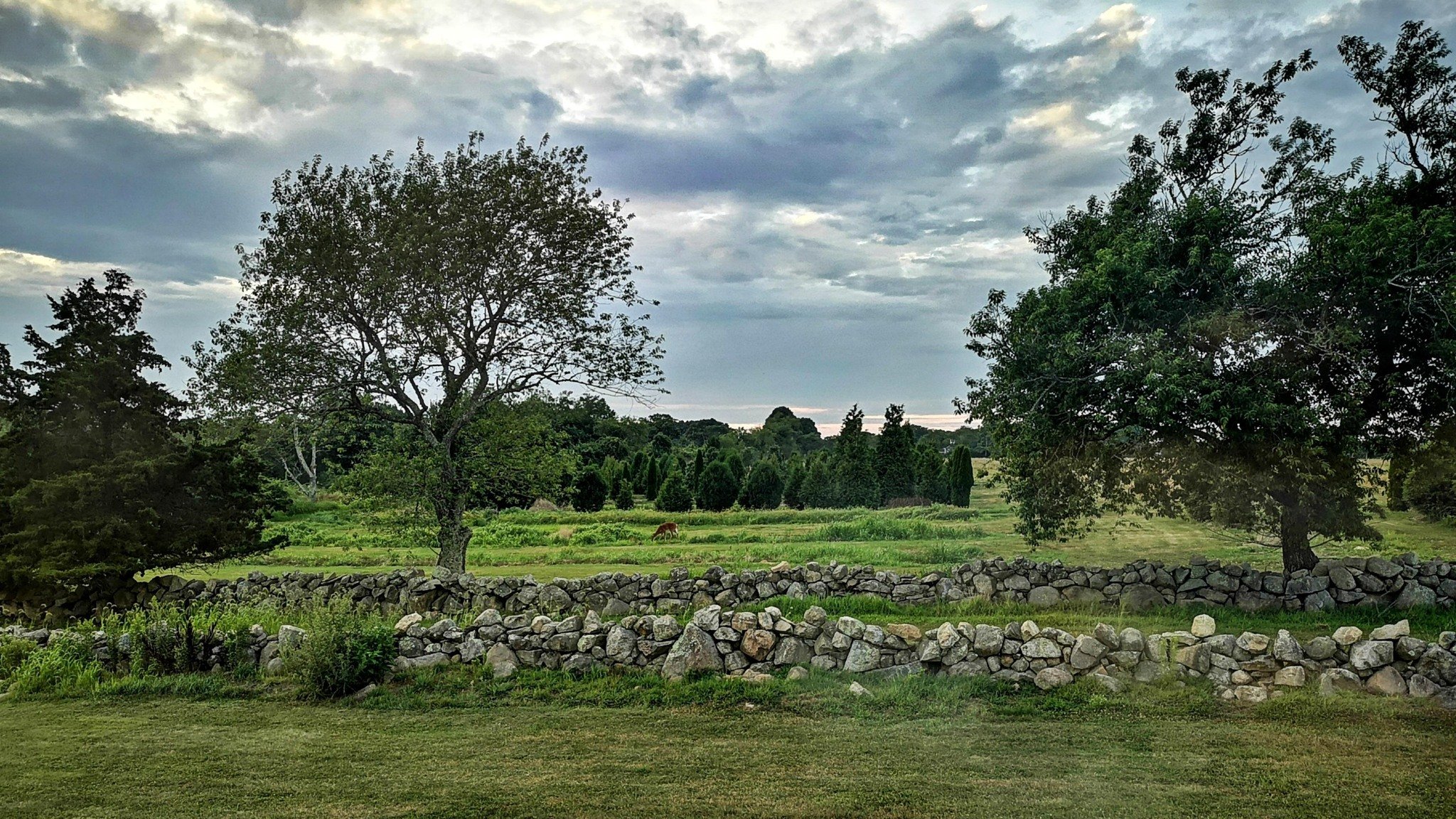
The stone walls of New England took approximately three billion man-hours to build, stretching farther than the distance from here to the Moon. Life was different when colonial settlers assembled them, inadvertently becoming a timeline of both natural and human history.
Another common use for stone walls became a protection for cemeteries. Westport contains more than one hundred noteworthy cemeteries and family plots. The Westport Historical Society has offered a tour entitled Stories in Stone, with many of these resting places bordered by the ubiquitous stone walls.
As writers, these locations are places to connect with the past, be inspired by the landscape, and perhaps find an elusive name for a stubborn fictional character. A stone wall can act as a prop, a barrier, or a symbol of one’s homeland.
Next time you see a stone wall, ask yourself who might have built it and when. What was it used for? What did it mean to its creator? To the local flora and fauna? How has a jumble of rocks lined up in rows come to signify so much to so many? The local walls are waiting with many more stories to reveal. It’s up to us to stop and listen.