Books About Swimming
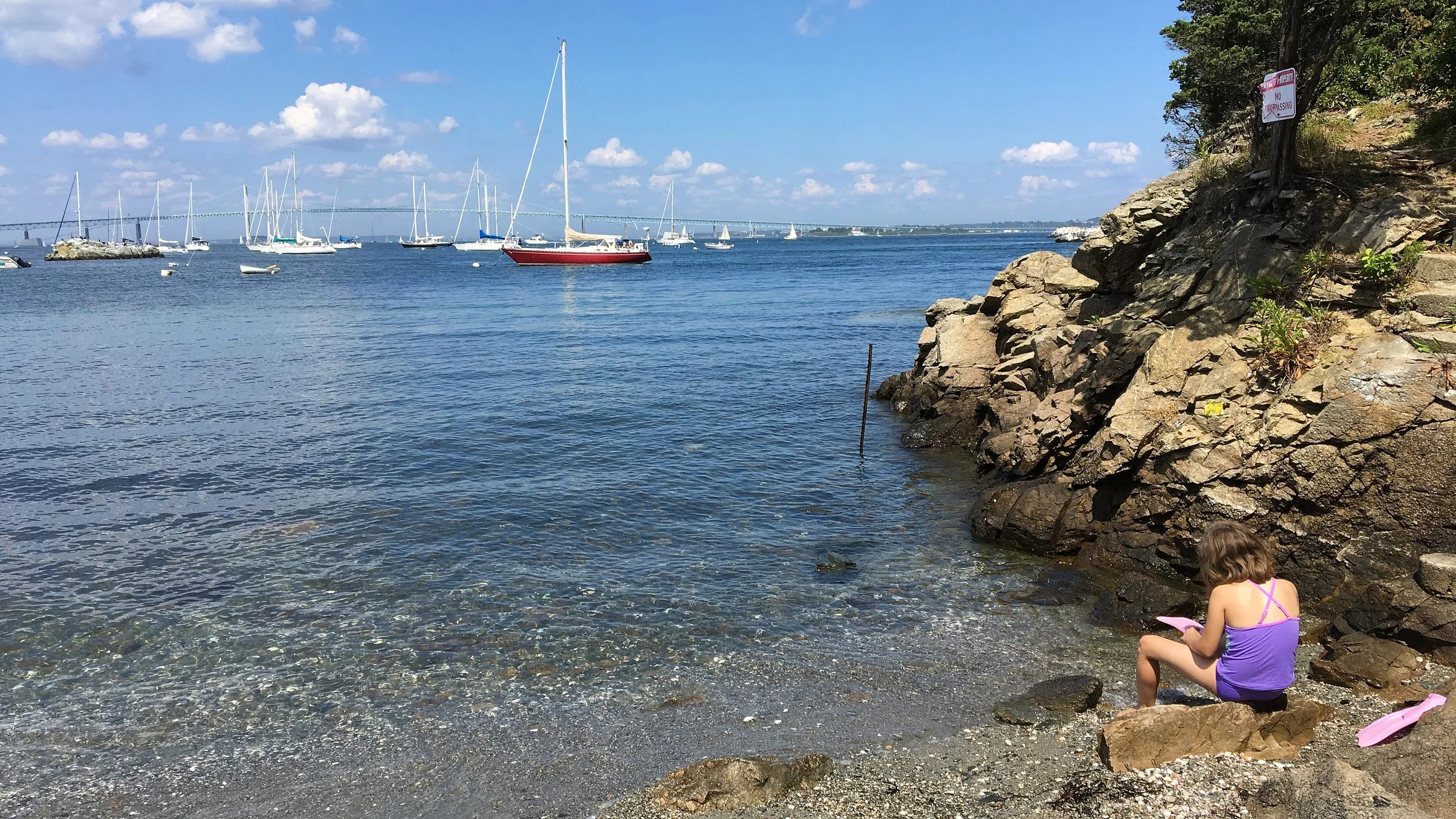
This past Sunday, a hot day in August, hoards of people were looking for a place to swim. The challenge wasn’t only finding a place that wasn’t already full, but a place that was open, as many inland swimming spots had been closed due to overabundant algae blooms. On the coast, even if you made it to the beach, the shore and the first dozen meters of the shallows were likely to be clogged with Heterosiphonia japonica, a red and smelly seaweed originating in Japan and the Pacific northwest that has invaded oceans around the world.
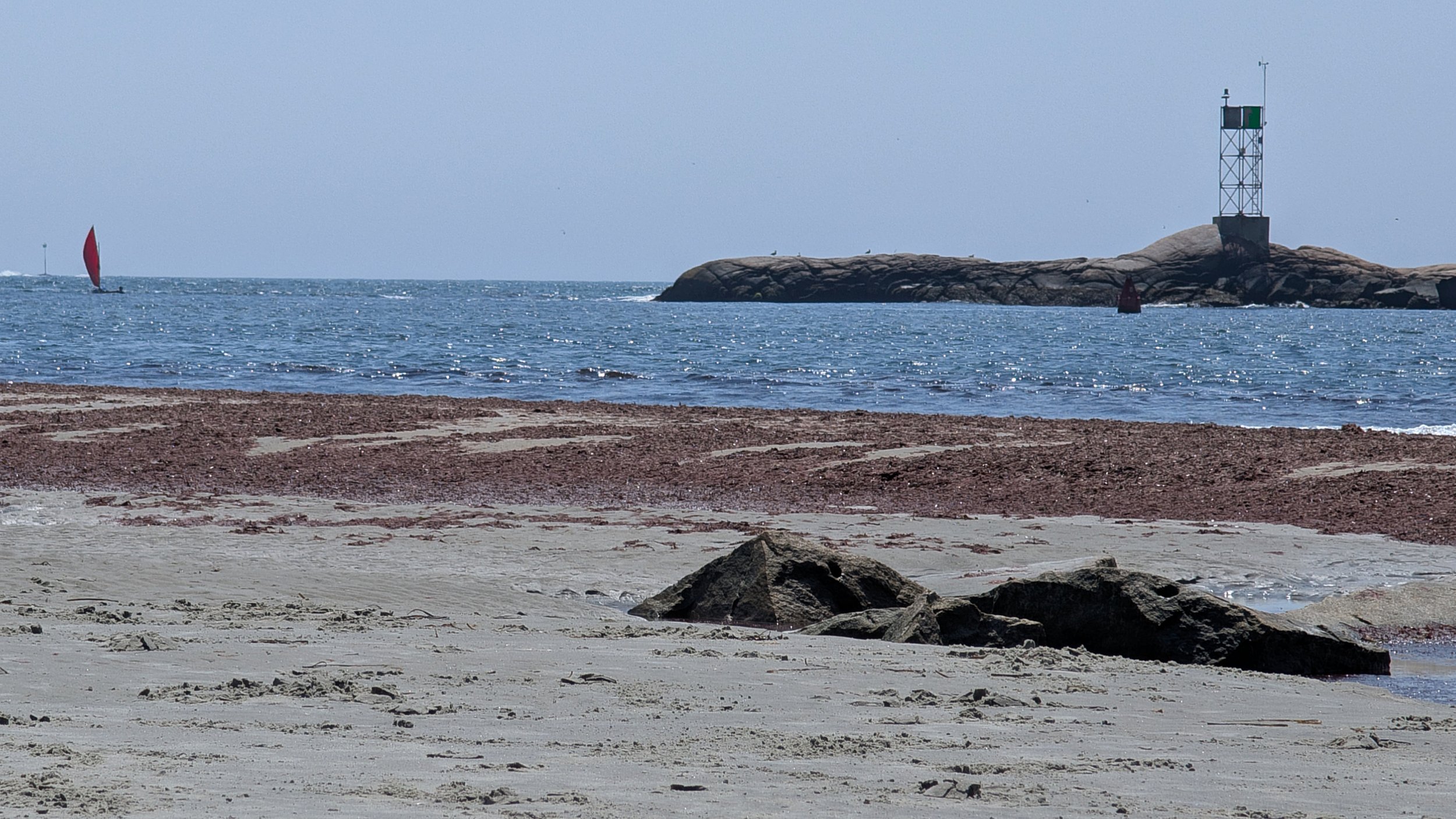
Luckily, the beach closest to my home in Westport, MA was mostly free of this inundation. Post-swim cleanup only required a thorough swimsuit rinse and a brief hair washing. As with many seasoned open-water swimmers, I am not easily deterred. I have surfed in seaweed so dense it felt as if the waves were a thick soup (Newport, RI experimented with a seaweed harvesting boat to mitigate the problem, but it was retired in 2017). I don’t balk at cyanobacteria–never let pets or children into the water if you suspect toxic algae is present–but merely keep my face out of the water and shower promptly. The same goes for other areas of questionable water quality, especially after major rain events, when sewage treatment plants become overburdened and deliberately discharge sewage into rivers and oceans. Again, I try to keep my head out of the water and rinse off when I’m done.
Do I sound crazy? Why not just go to a swimming pool instead?
To many swimmers, a swimming pool is nothing more than a glorified bathtub, small, boring, crowded, and often full of harsh chemicals. And RULES.
No. I believe in the right to swim. It is an instinct that many people around the world share. The popular sub-genre of swimming literature proves it.
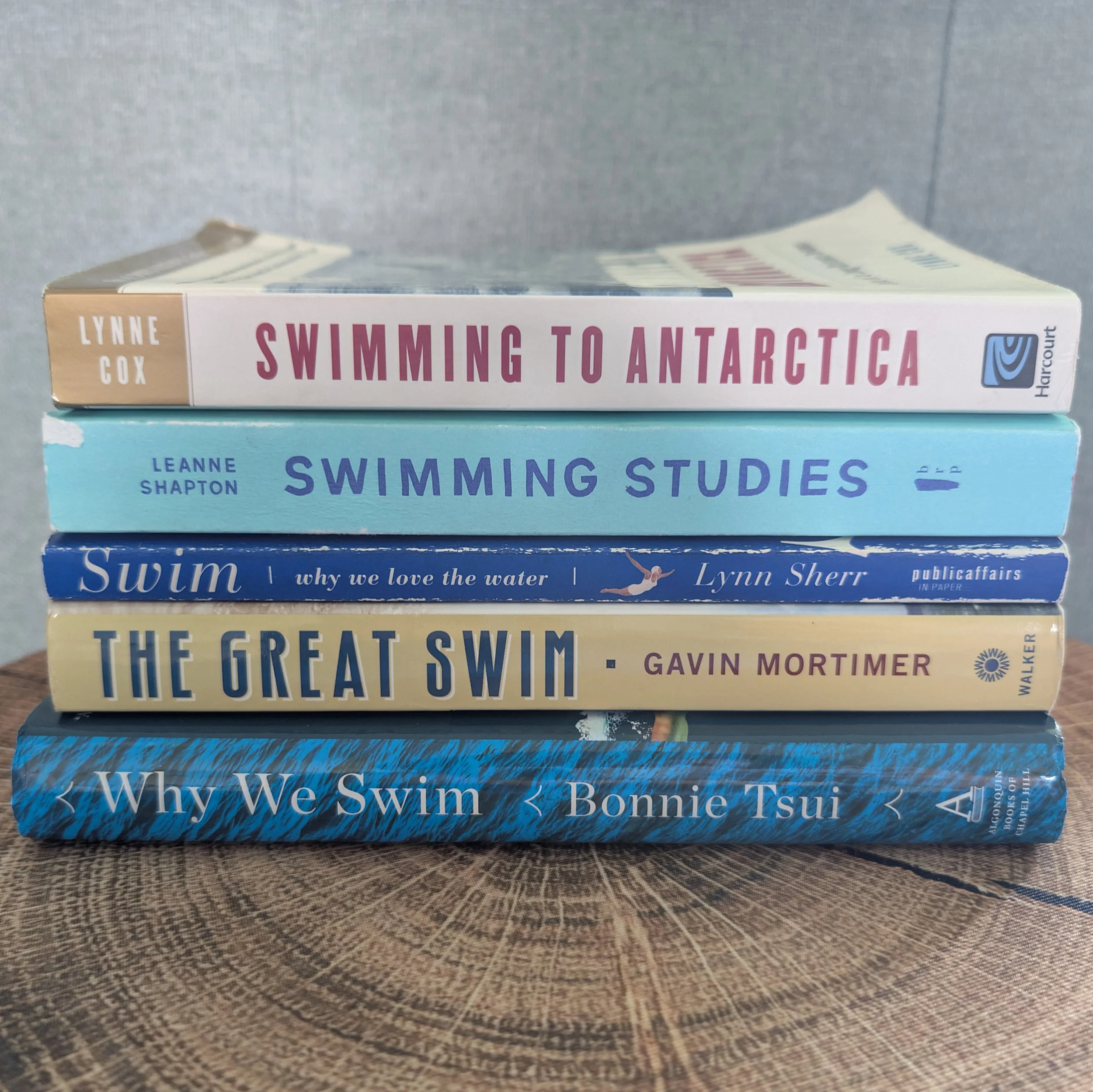
A few years ago, a book club I am part of read Why We Swim, by Bonnie Tsui, a title all enjoyed despite not everyone being interested in swimming. Another similarly named book worth a read is Swim: Why We Love The Water, by Lynn Sherr. And of course there’s Swimming to Antarctica, by Lynne Cox. Any of her titles are worth the time: riveting accounts of a swimmer willing to go to any lengths necessary to accomplish a swim that no one had previously attempted or even dreamed was possible.
Last month I read The Great Swim, by Gavin Mortimer, about the first woman to swim the English Channel. One hundred years ago, most people thought it impossible that any woman had the endurance to swim such a distance. But in 1926, multiple women attempted the feat, and while nineteen year old Gertrude Ederle was the first, she was not alone. Three weeks later, twenty-seven year old mother of two, Mille Gade, also completed the Channel swim, coming ashore at Shakespeare Cliff in Dover.
There are books about champion Olympic swimmers, instructional tomes discussing strokes and methods, and memoirs by swimmers who would just as soon stop breathing as they would willingly cease their swimming routines. While I’ve read some of these in order to keep my swim reading well-rounded, I prefer swim diaries to competitive how-tos.
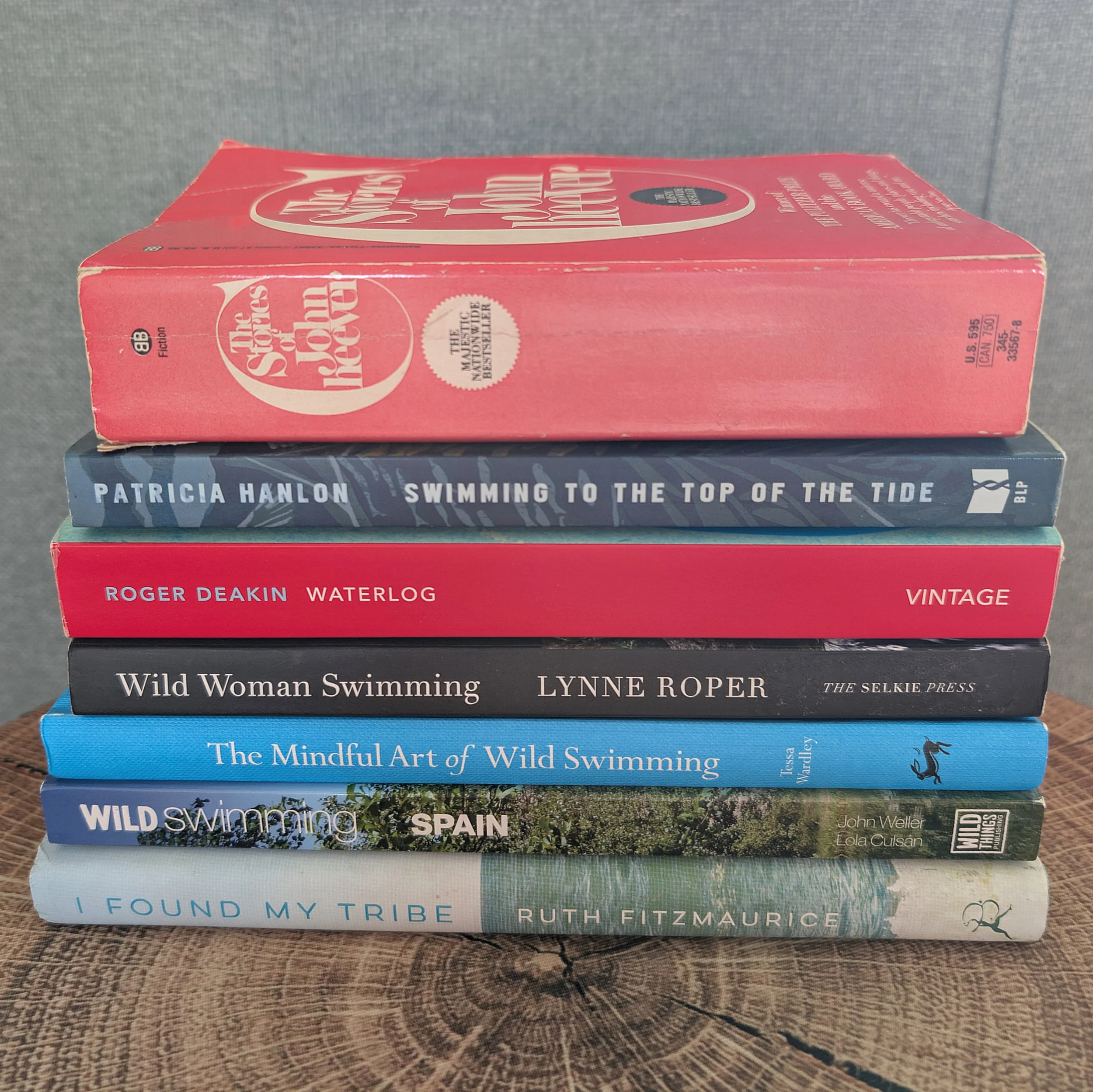
Waterlog, by Richard Deakin, is the book that is credited for launching the wild swimming movement. While my husband and I had already been at it for the better part of a decade by the time I discovered Waterlog, I identified with many of the author’s sentiments. Deakin’s prose journal was supposedly inspired by John Cheever’s short story The Swimmer. Other engaging swim diaries that have been turned into books include Swimming to the Top of the Tide, by Patricia Hanlon, Wild Woman Swimming, by Lynne Roper (yes, that’s the third Lynn/Lynne who’s authored a book on swimming… is that name prophetic?), and I Found My Tribe, by Ruth Fitzmaurice.
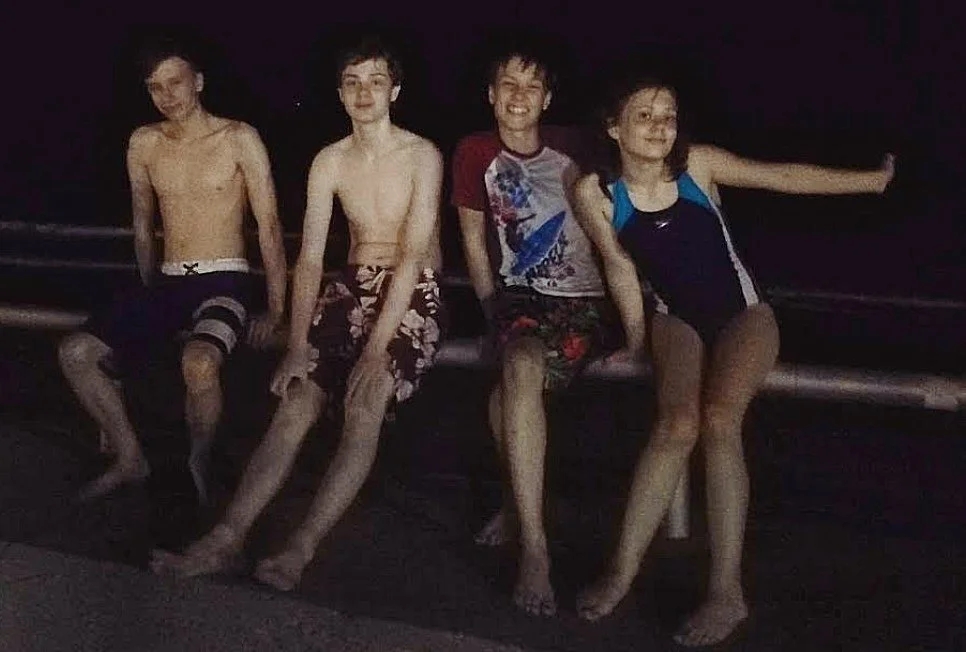
The author’s four kids after a bioluminescent night swim in Hull, MA
Over a decade ago I began documenting a few of my own swim adventures. I wrote down a list of locations that I thought would elicit captivating stories. The list bloomed into forty unique locales. I optimistically thought I could rope my husband into writing half of them, since many were places he “discovered” first. But most we’d experienced together, such as swimming across the Guadiana River from Portugal to Spain (the only time I’ve set foot in Spain, so far), breaking the melting ice to swim in Lake Cochituate, and swimming up the east branch of the Westport River to Gunning Island with a tent and two packages of tofu in a dry bag. While this project has sat on the back burner for quite some time, it is a fairly high personal priority to write these swimming accounts in my lifetime.
Swimming stories have a wide literary appeal. Time in the water brings back memories of bygone carefree childhood summers, immersing ourselves in water connects us with the natural world, and a body of water is the perfect backdrop for a murder mystery or adventurous journey. Choosing to put the word swimming in the title of a book is attractive to readers who are looking for something a little bit different.
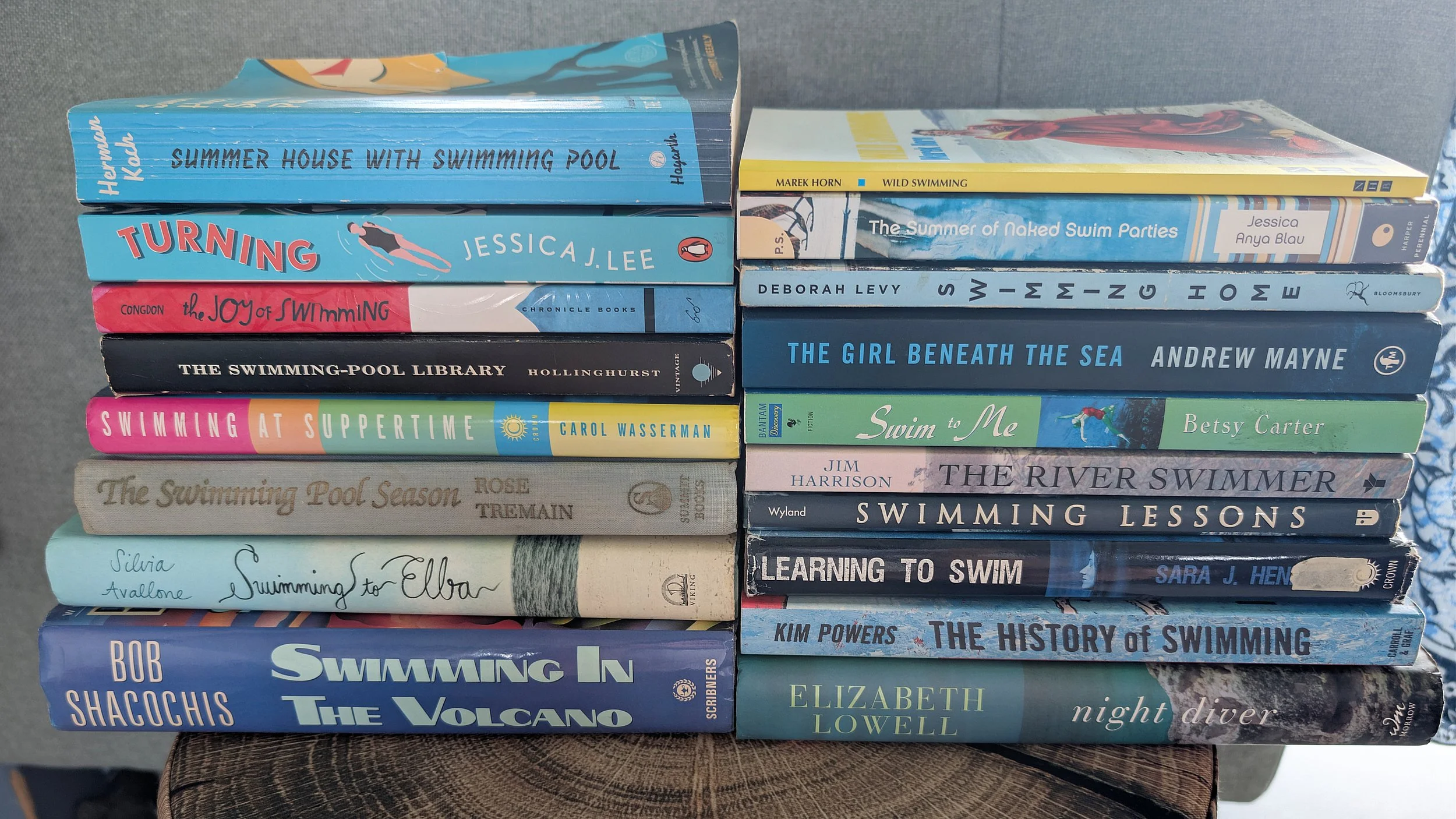
Hopefully, these suggestions have encouraged you to give books about swimming a try.
I’ll leave you with an excerpt from one of my forty swims, navigating against the ocean currents of Jamestown, RI on a summer day when we had forgotten our swim fins:
“One lesson ocean swimming teaches you is not to make assumptions. You must be ready to adjust your course based on the mercurial nature of the currents. The tide, wind, and swell direction combine, interact, and fluctuate. As we approached Bull Point, the current in the channel shifted from assisting our departure from land to whisking us out towards the shipping channel of Narragansett Bay. Classic schooners and flitting trimarans weaved past a hulking freighter. Larger speedboats raced under the Pell Bridge towards open waters.
We quickly changed course. Without fins on, we needed to remain close to shore. The strength of the current along the rocks differs greatly from the open expanse of the channel. Swimming directly against the tide was next to impossible, like trying to sail directly into the wind. Gauging our progress compared to a stationary point on land, we appeared to be swimming in a marine treadmill. Making any progress (devoid of fins for added momentum) had become exhausting. Eventually we would tire and our efforts would result in negative net forward movement.
It is instinct to avoid rough rocks and other hazards. Whether it is a tropical reef or New England granite covered in barnacles, these razor-sharp surfaces will instantly cut your feet open. Watching waves crash against these outcrops, you feel reluctant to approach them. Too close, and you’ll be slammed against their solid mass… too far and you’ll be swept out to sea. You have to feel how the water is behaving and swim in that narrow sweet spot that will allow you to continue to make progress. Once we found the current’s blind spot, we could proceed.”