Reading about Writing
I grew up with the sole intention of becoming a writer. Out of necessity, I ended up with a teaching degree and soon after, a military husband with an assignment to Loring AFB in the northeastern tip of Maine—allegedly the closest U.S. base to the USSR—in the heart of Maine potato country and a mere five miles from the Canadian border. My husband spent one week out of every three away from home at the Alert Facility snuggled close to B-52 bombers lying in wait to deliver nuclear holocaust at a moment’s notice; the rest of his time was spent practicing how to accomplish same. This was late 1979, and the Cold War was in full swing. I was alone a lot.
My degree felt useless—there were no jobs for military spouses there (or anywhere back then.) But with Virginia Woolf’s “room of one’s own and a fixed income” precept firmly in mind, a decent typewriter, and endless days home by myself, I had an opportunity at last to just write. But to learn craft? I was on my own.
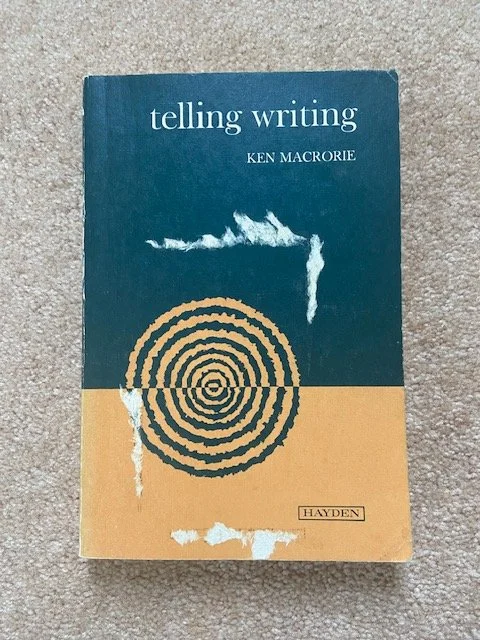
Fortunately, I’d lugged my college textbooks along when I left home. Along with taking a creative writing correspondence course, I turned to the book that had forever changed my writing, Telling Writing by Ken Macrorie, the text for my college English Comp class. Macrorie’s work, as part of the “New English” movement, created a ruckus in academia by teaching students—and their teachers—how to write their own truths instead of that painful, often obtuse language heretofore taught in English classes.
“All good writers speak in honest voices and tell the truth. … some kind of truth—a connection between the things written about, the words used in the writing and the author’s real experience in the world he knows well—whether in fact or dream or imagination.” Macrorie filled his textbook with student work from his pioneering classes. And my very first published work grew out of an assignment from Telling Writing.
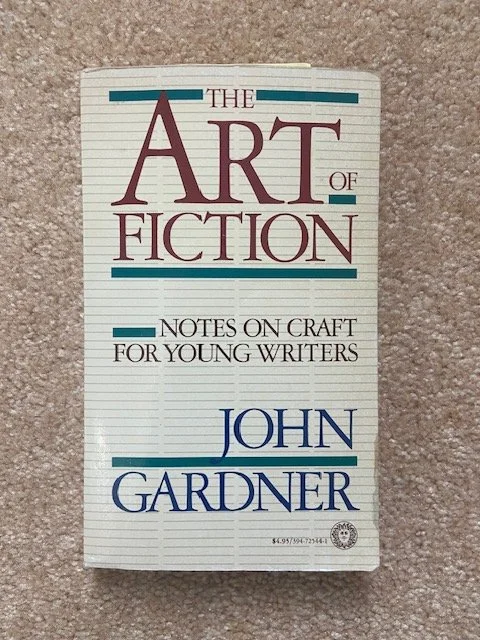
A few years later, I came across John Gardner’sThe Art of Fiction: Notes on Craft for Young Writers. Gardner, a novelist and professor of creative writing, enunciated the concept of the fictional dream grounded in “precision of detail”: “Whatever the genre may be, fiction does its work by creating a dream in the reader’s mind.”
Gardner explains the techniques and strategies writers must master, ranging from the minutiae of word choice and verb form to rhythm, point of view, and plotting. The book was, and continues to be, an MFA course in a single paperback.
Fast-forward quite a few years. I’m browsing a bookstore in Princeton, NJ. The Great Spring: Writing, Zen, and This Zigzag Lifeleaps into my hand—my first encounter with Natalie Goldberg.
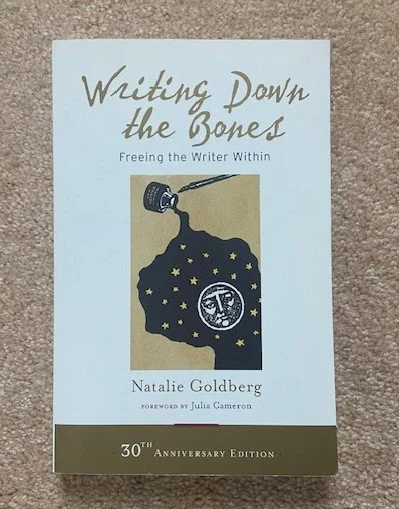
Her memoir led me directly to her Writing Down the Bones: Freeing the Writer Within—magically already on my bookshelf at home. If anyone has inherited the Macrorie mantle, I think it must be Natalie Goldberg. “When I teach a class, I want the students to be ‘writing down the bones,’ the essential, awake speech of their minds.”
Goldberg’s approach to writing resonated with me as a new meditator and lifelong journaler. She teaches writing as a practice—a commitment, like meditation—built around free writing for a set period of time within a set of rules (such as, “Keep your hand moving. Don't cross out. Lose control.”) Over the last few years, I’ve collected and read most of her writing books. They’re quick reads, often consisting of writing prompts nestled in memoir. But reading the books isn’t the point—it’s the doing. Pick up a fast pen and let her prompts cut straight to the truth of your own life.
These days, as I’ve worked my way through multiple drafts of my novel, I find reading about craft more encouraging than reading other people’s novels—after all, craft books imply that you too can write like the greats if you put in the work. My daughter attended the Association of Writers and Writing Programs (AWP) conference a few years ago and encouraged me to go this year. So we made it a family outing. After being momentarily overwhelmed, I found my way to the Graywolf Press table at the conference’s gargantuan Book Fair, where I discovered their 15-book Art of Series. I snagged, and have read:
The Art of Subtext: Beyond Plot by Charles Baxter;
The Art of Time in Fiction: As Long As It Takes, by Joan Silber; and
The Art of Perspective: Who Tells the Story by Christopher Castellani
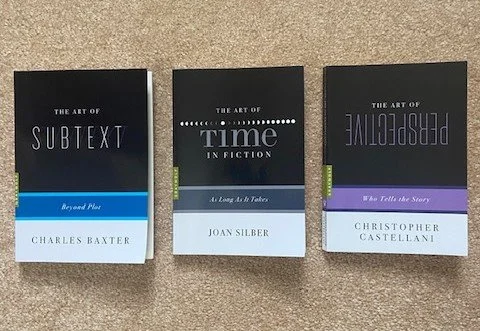
Although these books are brief, only 112-175 pages, they are not light reading since they bring literary analysis to bear on writing fiction. But they will leave you thinking deeply and creatively about your craft. You can see the entire series on the Graywolf website.
One of the results of joining the Westport Writers Group has been a growing file of short stories and some will need to see the light of day. That means finding places that publish short fiction. In the last century, the number of litmags was minuscule compared to today, when anyone with a computer, the will, and some money can start one. They are a valuable step on the publication journey. But with Duotrope’s database listing over 7,000 publishers, how can you find one willing to publish your work? At AWP, I attended a session on exactly this problem.
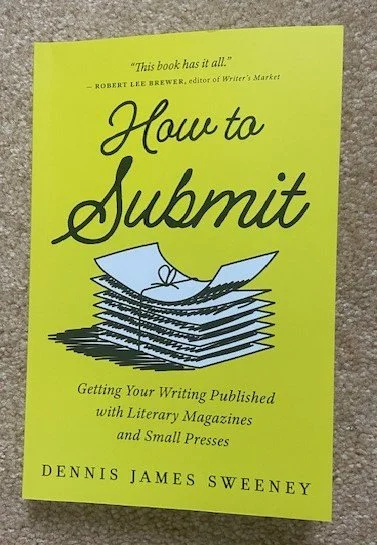
Dennis James Sweeney, an Amherst College professor and AWP panelist, has written the book on the subject. I just missed getting a signed copy of his How to Submit: Getting Your Writing Published with Literary Magazines and Small Presses, so I immediately grabbed a coffee and ordered it; it was waiting for me when I got home.
With a friendly and affirmative style, Sweeney shares the process he developed to navigate the galaxy of small press publishing. I’m already honing my list of publishers.
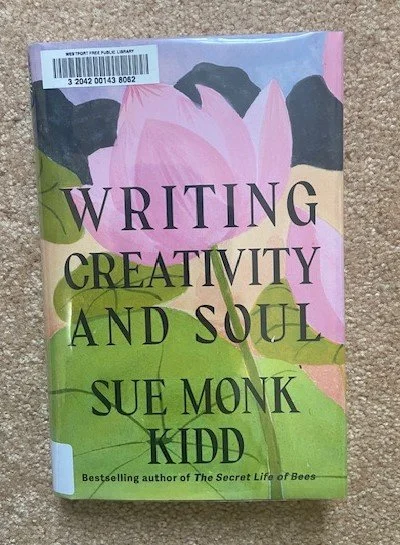
A few days before my trip to AWP, I came across Sue Monk Kidd’s Writing Creativity and Soul on the new nonfiction shelf at the Westport Free Public Library. Finding it felt like an omen, especially when I flipped through it and noticed the chapter heading, “A Pilgrimage to a Room of One’s Own”—I knew I had to read it. I devoured it in the car on the way to and from AWP (thanks must go to my son-in-law for driving).
Kidd’s writing journey reminded me of my own—with a difference. When we moved from Maine, I got a job researching and writing press releases for a Boston area hospital. I justified this as a “writing” job that would help us buy a house. But the job and the three hours spent commuting put my own writing on indefinite hold. Kidd didn’t do that. Instead, she quit her job to stay home and write, despite the pressures of bills and family. The book is partly memoir—how she began writing, her growth and development as a writer—but she also explains how she brought her novels, including The Secret Life of Bees, to life.
Books are great teachers of craft. They lure us in, teasing us with insight about our favorite writers’ craft. But don’t let them distract you from the real work. The only way to learn to write is to write.